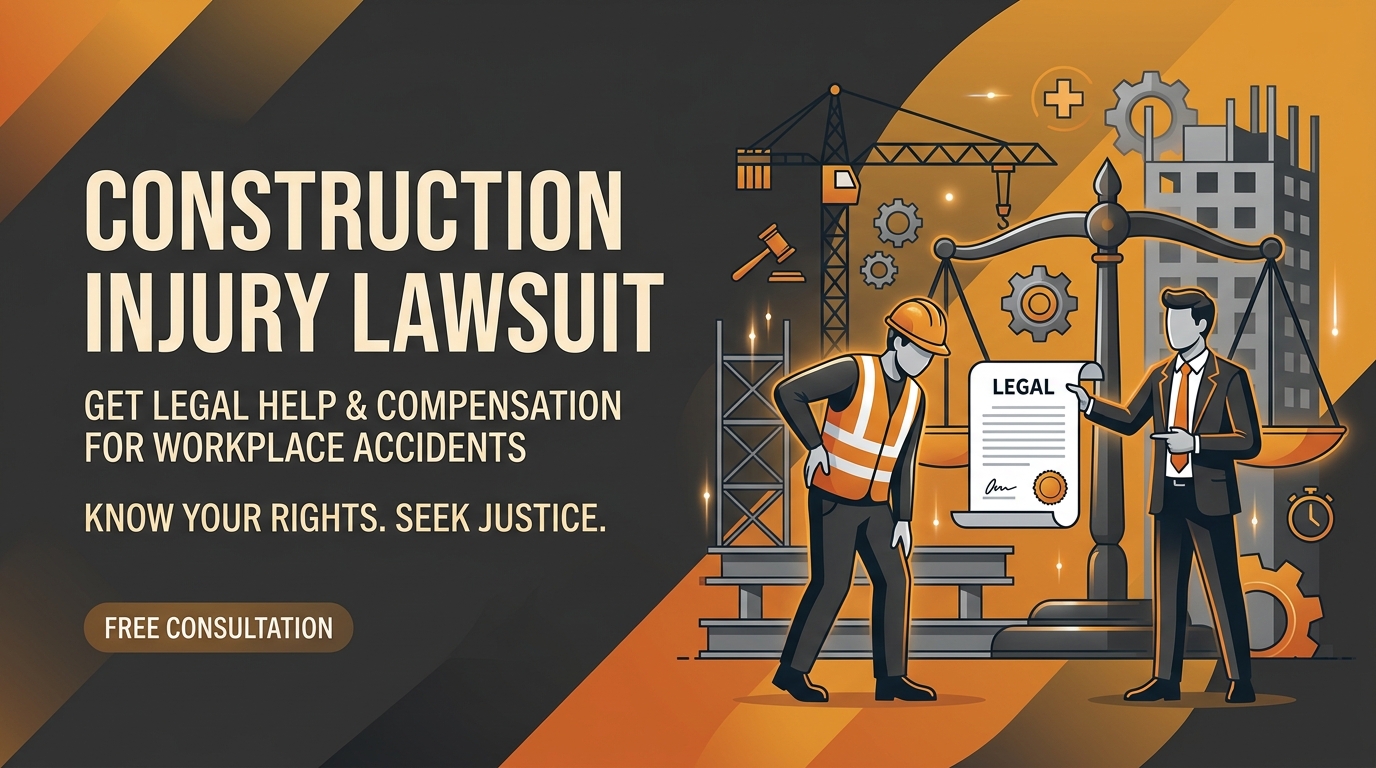
Construction sites are among the most hazardous workplaces in the United States. When accidents occur, injured workers or their families may pursue a construction injury lawsuit to seek compensation beyond basic workers’ compensation benefits. Proving fault in these cases requires careful navigation of legal standards, evidence, and regulatory frameworks.
This article explains the key aspects of construction injury lawsuits, focusing on how fault is established on job sites. It draws on established legal principles, federal and state regulations, and court processes to provide clarity for those seeking information. This article is for informational purposes only and does not constitute legal advice. Individuals should consult qualified attorneys for advice specific to their situations.
The Scope of Construction Site Risks
The construction industry accounts for a disproportionate share of workplace fatalities and injuries. According to data from the Bureau of Labor Statistics and the Occupational Safety and Health Administration (OSHA), falls, struck-by incidents, electrocutions, and caught-in or between hazards (often called the “Fatal Four”) remain leading causes.
Falls alone have historically represented a significant portion of construction deaths, often exceeding one-third in recent years. Other common incidents include workers being struck by falling objects, equipment failures, trench collapses, and exposure to unsafe conditions. These events can result in severe injuries such as fractures, spinal damage, traumatic brain injuries, or fatalities.
In a construction injury lawsuit, the focus often shifts from no-fault workers’ compensation to establishing liability against parties other than (or in addition to) the direct employer. This distinction is critical because workers’ compensation typically provides limited benefits without requiring proof of fault but restricts claims against the employer in most states.
Workers’ Compensation Versus Third-Party Construction Injury Lawsuits
Most injured construction workers first turn to the workers’ compensation system. This no-fault framework covers medical expenses and a portion of lost wages regardless of who caused the accident. However, it generally does not compensate for pain and suffering, and benefits may be capped.
A construction injury lawsuit, often framed as a third-party claim, allows pursuit of additional damages when negligence by another party contributed to the harm. Potential defendants include:
- General contractors or site managers responsible for overall safety.
- Subcontractors whose actions created hazards.
- Property owners who failed to maintain safe premises.
- Equipment manufacturers in cases of defective tools or machinery.
- Architects or engineers if design flaws contributed.
In some jurisdictions, such as New York, specific statutes expand protections. For example, New York Labor Law Section 240 (commonly known as the Scaffold Law) imposes strict liability on owners and general contractors for gravity-related accidents involving inadequate safety devices like scaffolds, ladders, or hoists during construction, demolition, or repair work. This can significantly strengthen a claim by reducing the need to prove traditional negligence in qualifying cases.
Establishing Fault: The Elements of Negligence in Construction Cases
Proving fault in a construction injury lawsuit centers on negligence. Plaintiffs must generally demonstrate four key elements by a preponderance of the evidence (more likely than not):
- Duty of Care: The defendant owed a legal duty to the injured worker. This includes general contractors’ responsibility to maintain a safe site, property owners’ premises liability obligations, or manufacturers’ duty to produce safe equipment. OSHA standards often help define the applicable standard of care.
- Breach of Duty: The defendant failed to meet that duty. Examples include failing to provide fall protection, inadequate training, ignoring known hazards, or violating safety regulations.
- Causation: The breach directly caused or substantially contributed to the injury. This requires linking the unsafe condition or action to the accident, often through expert testimony or site investigations.
- Damages: The plaintiff suffered actual harm, such as medical bills, lost income, or long-term disability.
In construction settings, multiple parties may share responsibility, leading to comparative negligence analyses in many states. However, strict liability rules in certain jurisdictions (like New York’s Scaffold Law) can limit defenses based on the worker’s own actions in specific scenarios.
OSHA violations frequently serve as strong evidence of breach. While an OSHA citation does not automatically prove civil liability, courts often admit it as relevant to the standard of care. Investigations may identify “creating,” “exposing,” “correcting,” or “controlling” employers on multi-contractor sites.
Common Scenarios in Construction Injury Lawsuits
Construction injury lawsuits arise from diverse incidents. Frequent examples include:
- Falls from Heights: Inadequate scaffolding, unguarded edges, or improper ladder use. OSHA requires fall protection at heights of six feet or more in most construction scenarios.
- Struck-By Accidents: Falling tools, materials, or swinging equipment due to poor securing or lack of barriers.
- Trench and Excavation Collapses: Failure to use proper shoring or sloping, violating OSHA excavation standards.
- Electrocutions: Contact with live wires or inadequate grounding.
- Equipment-Related Injuries: Defective machinery or operator negligence.
Premises liability principles may apply when property owners knew or should have known of dangerous conditions but failed to address them. In third-party claims, evidence of prior complaints, safety meeting records, or inspection reports can prove notice of hazards.
The Role of Regulatory Frameworks and Investigations
OSHA, established under the Occupational Safety and Health Act of 1970, sets and enforces standards for construction under 29 CFR 1926. These cover fall protection, scaffolding, cranes, electrical safety, and more. Employers must comply with the General Duty Clause to address recognized hazards even without a specific standard.
An OSHA investigation following a serious incident or fatality can produce reports, citations, and corrective action plans usable in litigation. Such findings help establish industry standards and deviations from them. State plans in approximately half the states may have additional or stricter rules.
Other regulations, such as those from the Environmental Protection Agency or local building codes, may also inform liability. In complex projects, contractual safety responsibilities between owners, general contractors, and subs become relevant for apportioning fault.
Gathering and Preserving Evidence
Successful construction injury lawsuits depend on thorough evidence collection soon after the incident:
- Photographs and videos of the scene, equipment, and hazards.
- Witness statements from coworkers or bystanders.
- Accident reports, safety logs, and training records.
- Medical records documenting injuries and causation.
- Expert analyses from safety engineers, accident reconstructionists, or medical specialists.
- OSHA or other regulatory filings.
Preservation letters to potential defendants can prevent spoliation of evidence like destroyed footage or altered sites. Statutes of limitations vary by state and claim type, making prompt action essential.
The Legal Process in Construction Injury Cases
A typical construction injury lawsuit follows standard civil litigation steps:
- Investigation and Filing: Attorneys evaluate claims, identify defendants, and file a complaint in the appropriate court.
- Discovery: Exchange of documents, depositions, and expert reports. This phase often reveals critical safety lapses.
- Motions and Hearings: Summary judgment attempts or challenges to evidence admissibility.
- Settlement Negotiations: Many cases resolve through mediation or direct talks, especially with strong evidence of violations.
- Trial and Appeals: If unresolved, a jury or judge determines liability and damages. Verdicts may face appeals on legal grounds.
Multi-party litigation can complicate proceedings, requiring coordination among insurers and counsel. In high-profile or catastrophic cases, class actions or mass torts occasionally arise, though most remain individual.
Potential Damages Recoverable
Successful plaintiffs in construction injury lawsuits may recover economic damages (medical costs, lost wages, future earning capacity) and non-economic damages (pain, suffering, loss of enjoyment of life). In cases involving gross negligence or wrongful death, punitive damages might apply in some jurisdictions, though they remain rare and subject to strict limits.
Structured settlements or trusts can help manage long-term needs for catastrophic injuries. Workers’ compensation liens often require repayment from third-party recoveries, necessitating careful negotiation.
Challenges in Proving Fault
Construction sites involve layered responsibilities, transient workers, and rapidly changing conditions, complicating fault determination. Defendants may argue worker contributory negligence, unforeseeable events, or that another party controlled the hazard. Multiple employers on one site can lead to disputes over who bore safety duties.
Access to evidence may be restricted, and powerful industry players might mount vigorous defenses. Expert testimony is often essential but expensive. Jurisdictional differences, such as comparative versus contributory negligence states, affect outcomes.
Despite these hurdles, documented OSHA violations, internal safety failures, or prior similar incidents can decisively shift the balance.
Real-World Impact and Precedents
Court decisions shape how fault is proven. For instance, interpretations of New York Labor Law 240 have expanded protections for gravity-related accidents, influencing practices nationwide through industry awareness.
Settlements and verdicts in construction cases often reach significant amounts when severe injuries and clear violations coincide, reflecting medical costs, lifelong care needs, and lost income. These outcomes underscore the financial and human stakes.
Such cases also drive broader safety improvements, as litigation highlights systemic issues and encourages better compliance with standards.
Preventive Measures and Industry Responsibilities
While this article addresses post-accident lawsuits, prevention remains paramount. Employers and contractors should implement comprehensive safety programs, regular training, proper equipment maintenance, and hazard assessments. Workers benefit from understanding their rights to refuse unsafe work and report violations without retaliation.
Regulatory bodies like OSHA promote initiatives such as fall prevention stand-downs to raise awareness.
Conclusion
A construction injury lawsuit offers a pathway to fuller accountability and compensation when job site negligence causes harm. Proving fault demands a clear understanding of duty, breach, causation, and damages, supported by regulatory evidence, expert input, and timely investigation.
Laws and processes vary by jurisdiction, and outcomes depend on specific facts. Affected individuals should seek experienced legal counsel promptly to protect their rights and navigate the complexities of these claims. By illuminating these legal mechanisms, this discussion aims to support informed decision-making in the wake of workplace tragedies.
You May Also Like: Contractor Ronald Lewis Ohio Lawsuit Raises Serious Questions